Designed for wet environments
Vacuum potting helps eliminate voids around the windings and lead joints, reducing paths for moisture and condensation to reach the motor.
OUTDOOR COOLING APPLICATIONS
A vacuum-potted motor design for cooling equipment that faces rain, dust, salt air, condensation and repeated temperature changes.
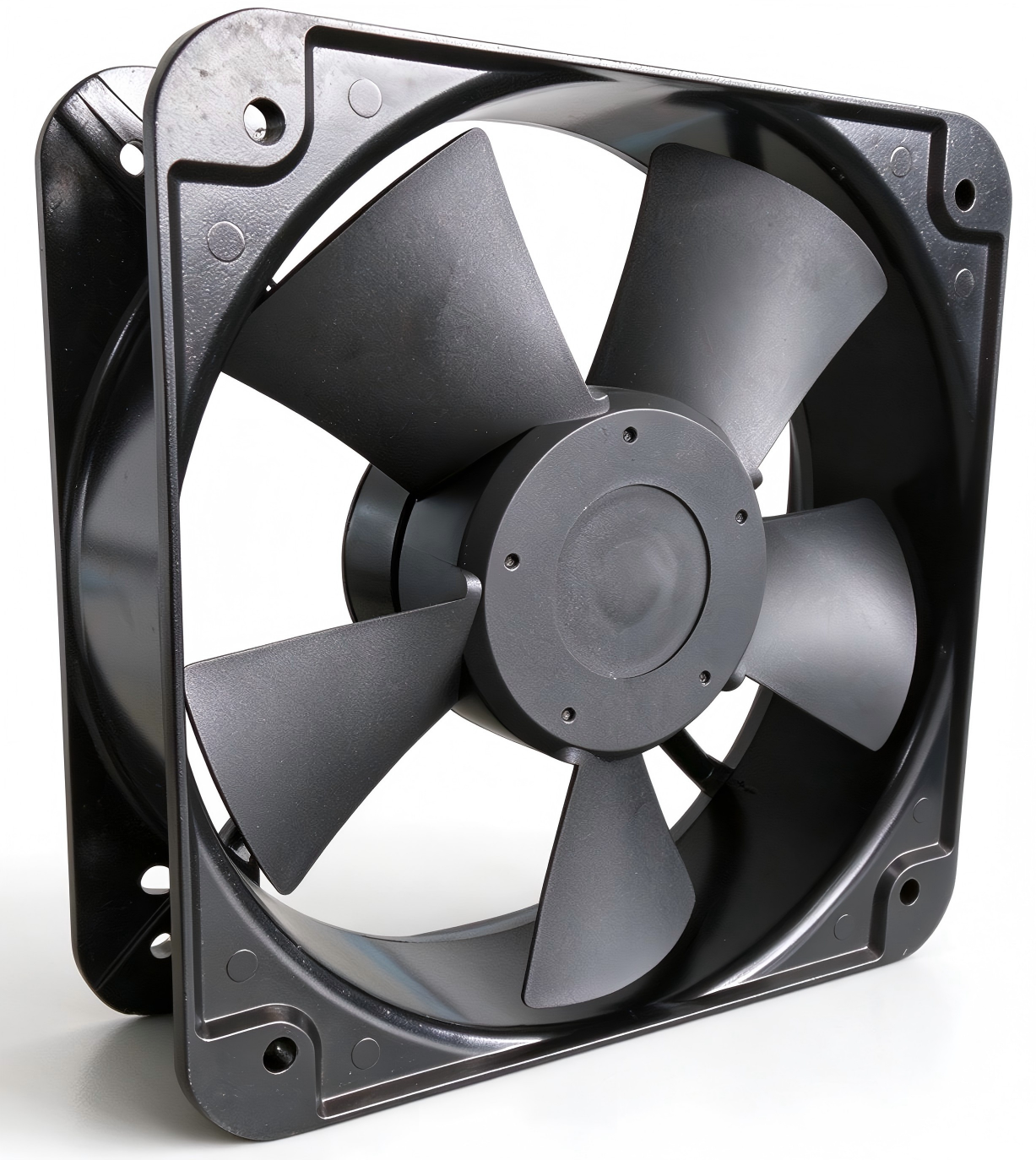
A selected configuration with the potted motor protected inside the completed fan assembly.
IP68 RANGE
Examples from our IP68 motor development work, showing protected motor assemblies and finished axial-fan configurations across the range.
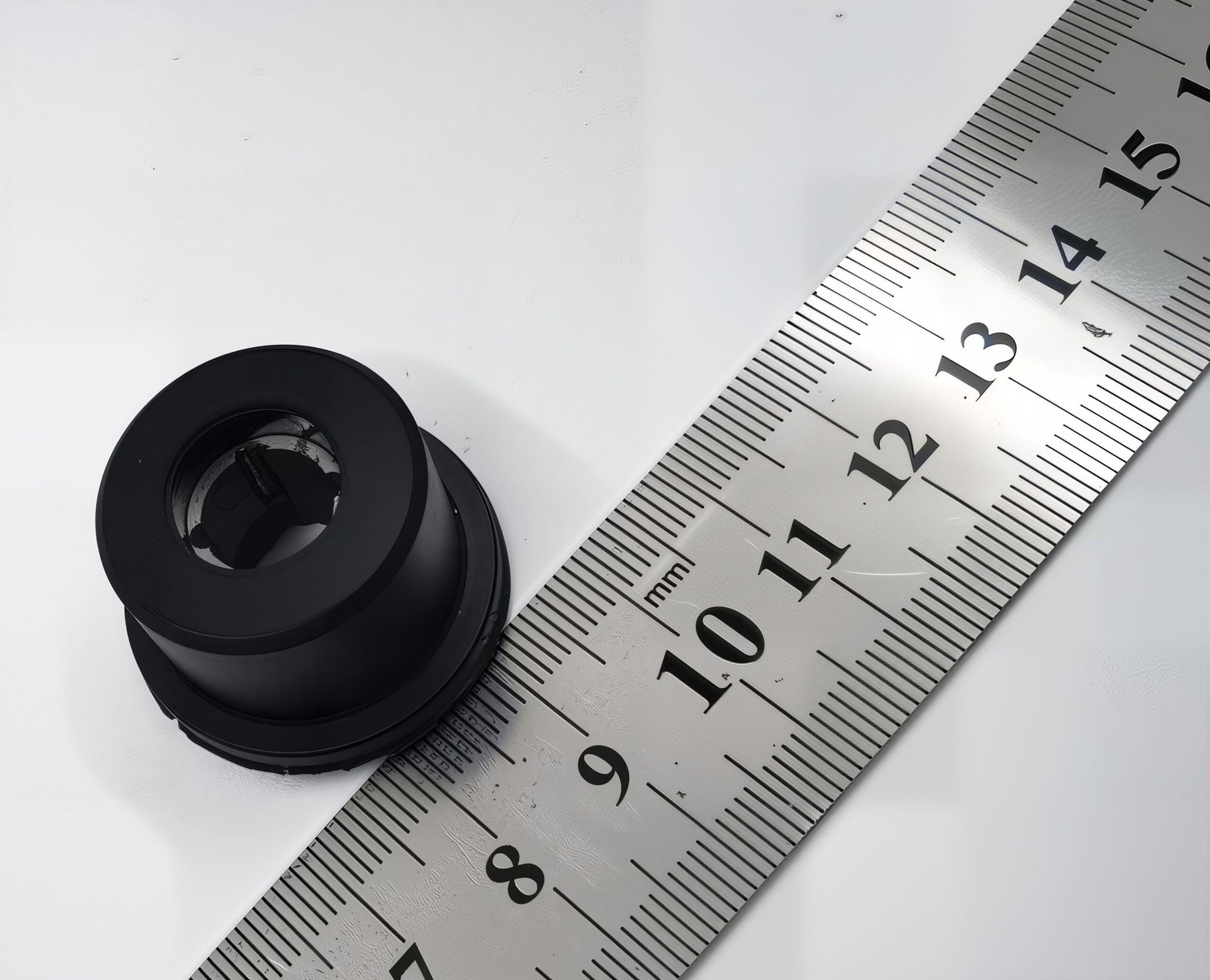
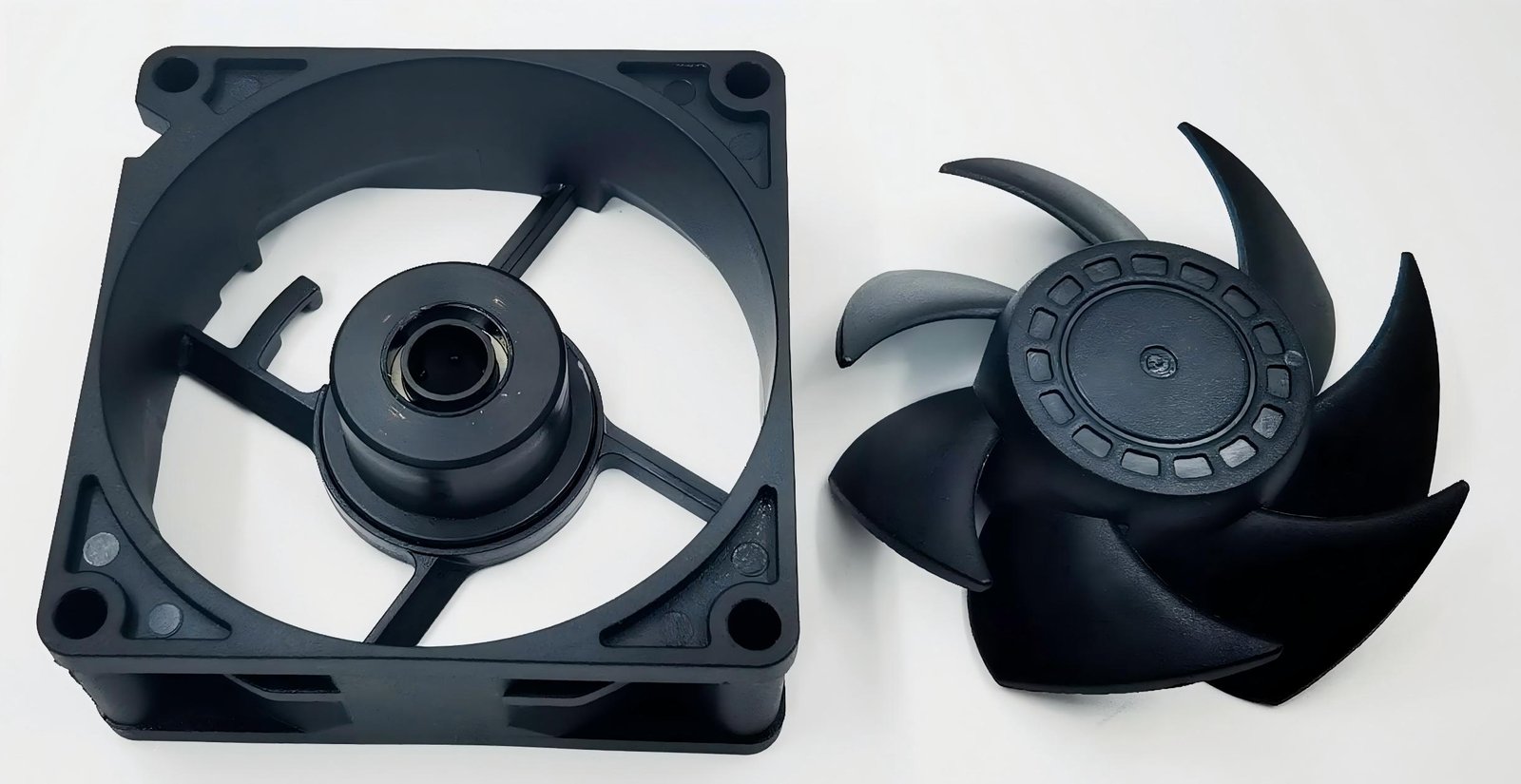
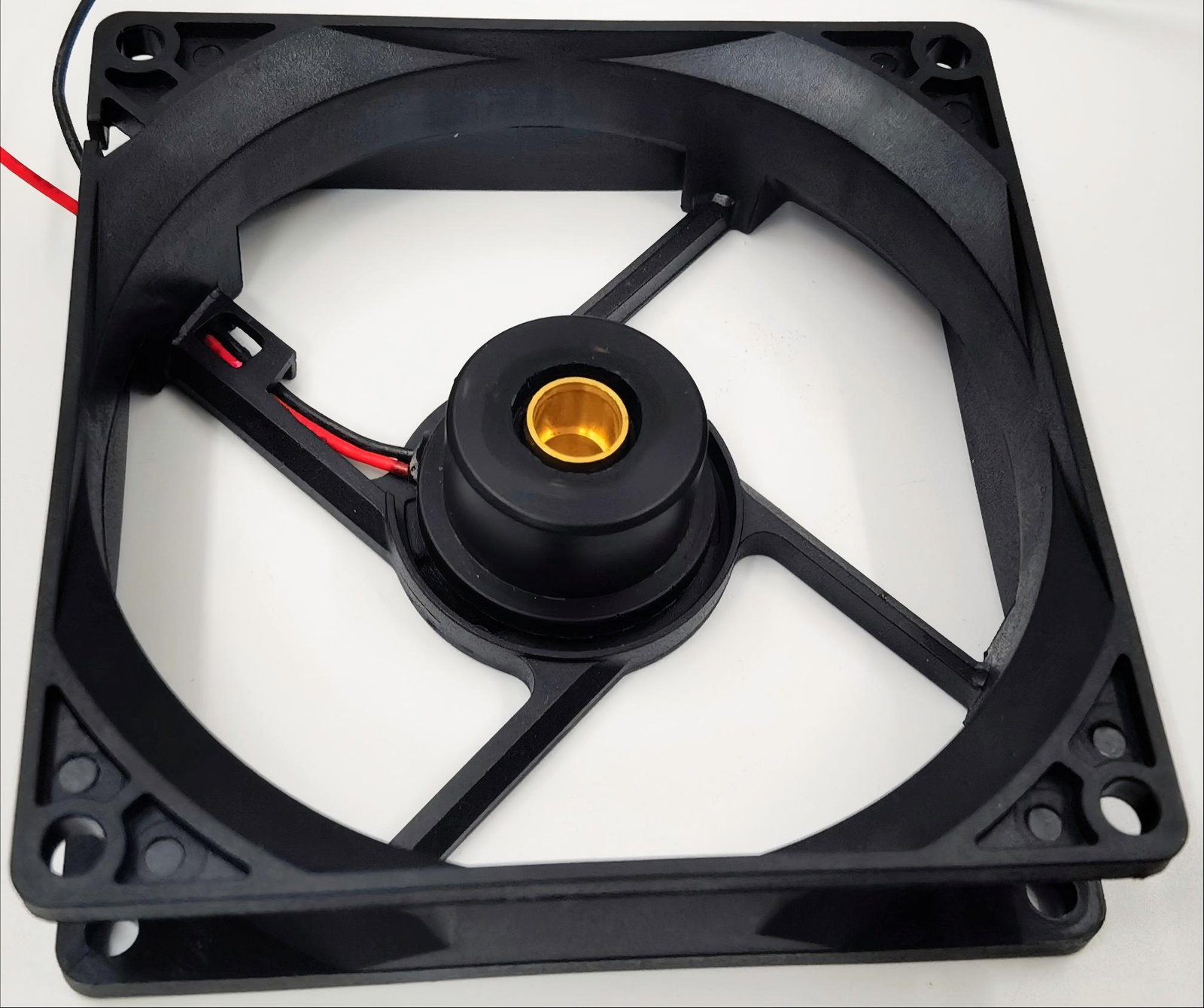
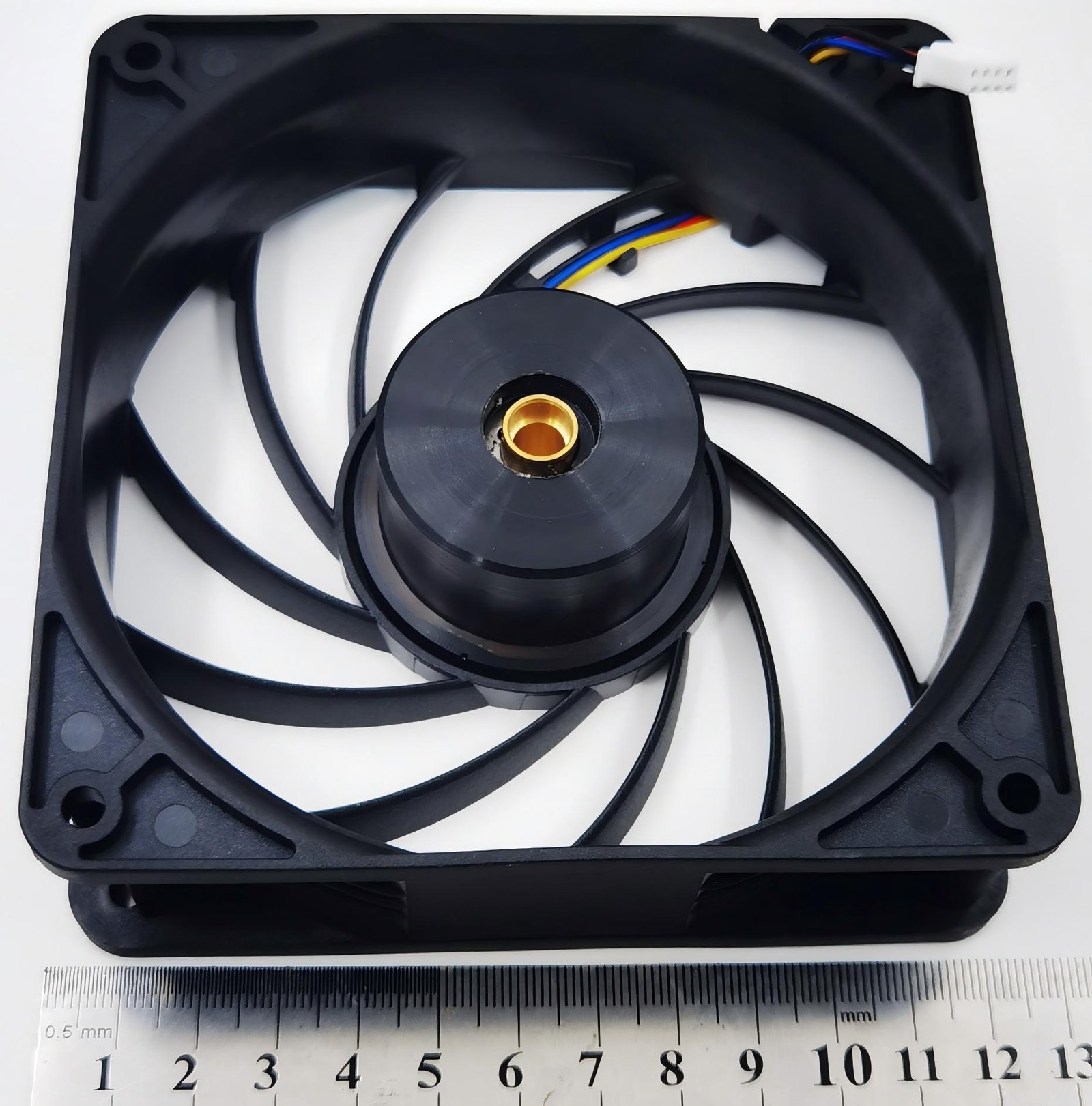
Ingress-protection coverage, dimensions, electrical options and test requirements are confirmed for the selected model and finished equipment.
Vacuum potting helps eliminate voids around the windings and lead joints, reducing paths for moisture and condensation to reach the motor.
The high-thermal-conductivity compound is selected to move heat from the windings through the motor structure and into the airflow.
The cured encapsulation supports the winding structure against vibration, shock and abrasive outdoor conditions.
THE PROBLEM
A conventional fan motor relies on varnish, seals and a controlled indoor environment. In outdoor cabinets and equipment, moisture, salt fog, dust and vibration can affect winding insulation, solder joints and bearings.
For applications where field replacement is costly, the motor needs protection that begins inside the fan rather than at the enclosure door.
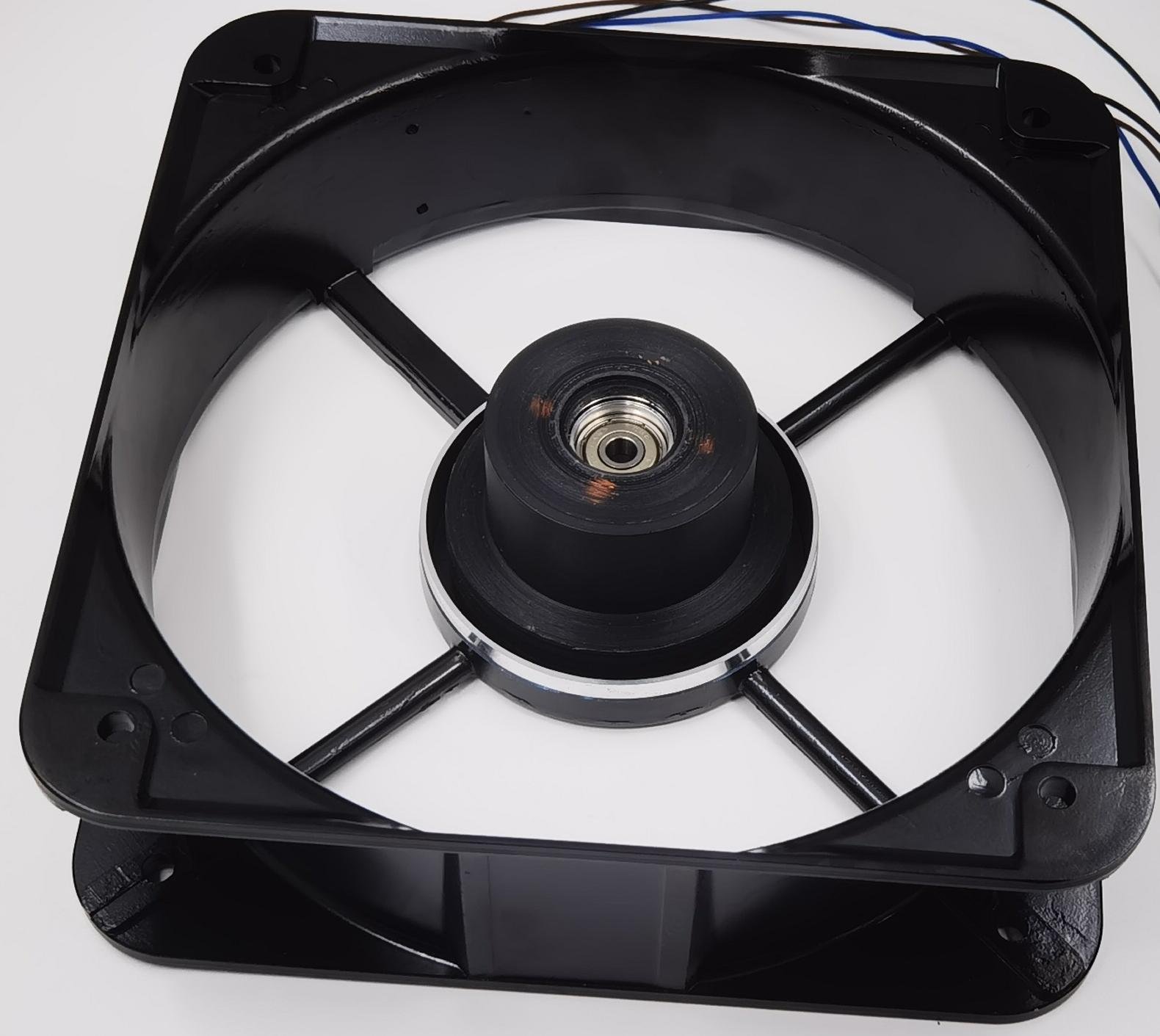
The process begins with a wound stator. In the vacuum chamber, epoxy reaches the spaces between wires, around laminations and over lead joints. After curing, the motor becomes a solid encapsulated unit intended to resist water and dust ingress for the selected configuration.
Vacuum-potted stator assembly before blade installation.
THE PROCESS
The stator is submerged in a formulated epoxy compound and placed under vacuum to draw out trapped air.
After degassing, the compound cures into a hard, sealed structure around the winding and connection areas.
The journal process includes run-in testing, insulation-resistance checks and final water-test verification before release.
IN THE FIELD
Coastal deployments, monsoon rain, salt spray and daily temperature swings.
Unattended electrical equipment exposed to sun, rain and changing ambient conditions.
High humidity, corrosive air and continuously operating ventilation systems.
Wash-down exposure, vibration and compact enclosure cooling requirements.
Salt-laden air and demanding service environments near the coast.
Cooling projects that need a configuration reviewed against real operating conditions.
ENGINEERING REVIEW
Send the enclosure size, supply voltage, airflow target, ambient temperature range, exposure to water or salt, expected operating hours and project quantity. Our team can review the appropriate motor design and configuration.
Tell us what the equipment faces in the field and we will help review the configuration.